Takenya Freeney, the Chief Treble Maker, is a singer, voice instructor, composer, and entrepreneur explains how to use your voice, literally and figuratively, to create your Signature Sound to your best advantage in your business.
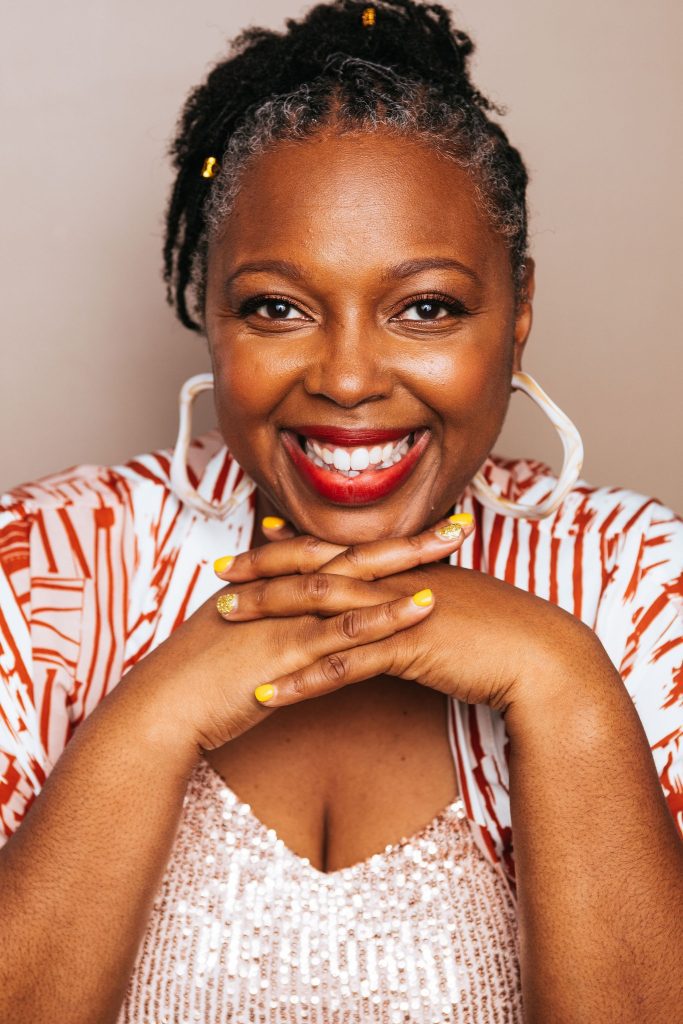
Creating Your Signature Sound with Takenya Freeney
Listen to the Episode
Podcast: Play in new window | Download
Connect with Takenya
On Facebook: https://www.facebook.com/takenya.freeney
On Instagram: https://www.instagram.com/kenyaskeys
Her website: https://kenyaskeys.com
Find out more about her Put Your Best Voice Forward Workshop
Episode Transcript
Welcome everyone. I am here today with Takenya Freeney who is a singer, composer, music teacher, and an expert at helping people release their inner superstar.
She has over 20 years of experience teaching music and voice lessons. She is here today to talk to us about how you can turn your voice into a money-making tool for your business by developing a signature sound. Welcome Tekenya.
Takenya Freeney: Hey Laurie. Yay. Yes, I’m so excited to be talking to you about this because as a vocal performer and somebody who instructs people how to use instruments and how to show up vocally, you are an expert on using this instrument figuratively and literally in your business, in life, everywhere.
So let’s dig in to all of this. First of all, what is a signature sound and why is it important?
Takenya Freeney: I love this question. A signature sound is the thing that is uniquely yours. When you create your signature sound, you’re creating something that easily identifies you to your audience.
They’re able to buy in with you and your authenticity. They’re able to buy in with you as far as creating that personal connection with them. You know how some people say sometimes, “Well, I want to sing just like insert artist name.” We don’t need another “just like insert artist names.” We need a you. We need a you.
You want to be your own voice. You want to have your own signature sound. For me personally, my signature sound when it comes to singing, my signature sound is I have the voice that sits kind of low. I have a low-ish singing voice.
Takenya Freeney: That allows me to sing a lot of the songs that you would expect a male to sing. A lot of times people aren’t necessarily expecting that. You’re not gonna get me singing all up in the rafters with all these high voice folks because that’s not where the happy place is for my voice. And when people hear the richness and the warmth and the depth, the breadth of my lows, they are floored. So that signature sound is the part of your voice that you love to shine the spotlight on.
That signature sound is the part that comes straight from the heart and right into the ears of your audience.
My signature sound includes my laugh. I have a special laugh. I’ve always had it. I’m highly identifiable by this laugh. It’s my calling card. And I know that’s not what exactly what you’re talking about. You’re talking about your voice and the way your voice sounds and the way your messaging and your brand. But that for me is my laugh. That’s part of it.
That’s the thing that’s uniquely yours. Who can copy your laugh, Lori? Loons. Loons can copy my laugh. I’ve actually heard them and I’m like, “That sounds like me.”
Or a car that won’t turn over kind of also sounds like me. Yeah, it’s pretty. Or a witch. Like I do a witch cackle. So witches can actually. Yeah. So it’s not uniquely mine but it’s a very select set of laugh twins that I have there.
You’re talking about brand awareness and connecting with your audience in a way that they resonate with you in the way that you sound and what you’re saying.
Takenya Freeney: Oh yeah. You have to build that personal connection with your audience. And if you’re never giving them your voice, they’re not necessarily making a connection with a flat piece of media. They need to see you. They need to hear you.
There’s a saying, “A customer needs to have seven touch points before you’ve built enough trust for them to buy from you.” But if they see you or hear you, we can kind of jump the line. We can collapse. We can definitely. That’s the word. We can collapse that timeline significantly.
So if you are in an online business and you are only posting text, you’re only doing images, it’s gonna take a lot longer for your audience to say, “Okay this is somebody I connect with. This is somebody I trust.” What kind of content would you say is the type of content that’s gonna collapse that timeline?
I can tell you honestly when you look at the numbers for people who need to see the data, I can honestly tell you that if I put something that I’ve said in like one of those cute little Canva visuals and like post it to social media versus me saying the exact same thing, making a video of it, and posting it as a real or a TikTok or a YouTube short or a Facebook, what you’m gonna do?
When I’m in it, the engagement’s way better. If I was doing like an Instagram Live every week and then I would take that Instagram Live and put that on YouTube, then I’d take that same Instagram Live and put it out in the emails that I was sending out every week and then I would take that same Facebook Live and I would make it into a blog post.
Or I just like said the same thing I said again and just like take it out real quick and BAM! So we’re collapsing that time to make the connection. We’re talking about using audio and video in our business as part of our marketing, as part of our sales process.
There may be some people in the audience who are just starting out, if they’re not comfortable showing their face, starting a podcast or starting a video or something like that because they’re nervous to use their voice literally and figuratively because of their own self-conscious, how they hear themselves, what they think they sound like, what they think other people think they sound like.
When I was a kid, I went to the Museum of Science in Boston and everybody who’s from Boston knows what I’m talking about, but they had this exhibit where you could pick up a phone, talk into it and hear what you sounded like in the phone. And I was in elementary school so I picked up the phone and what I heard horrified me.
I said, “Is that what I sound like? I sound like I should be on Wizard of Oz?” So I was very self-conscious of how I sounded to other people growing up.
Fast forward to, you know, being at work, giving presentations, that only intensified that anxiety of like having to give presentations. So now not only is everybody staring at me, but they’re thinking about what my voice sounds like.
And of course, what you sound like on the phone is not the same as in person, but I’d already grooved in this negative thought like for decades. So it was in there. It took a lot of work to kind of overcome this and say, “Listen, this is what I sound like. Deal with it.” I’m fascinated by this, that you were able to do this as a kid, like pick up the phone, say something into it and actually get to hear what it sounds like back. But when we hear what we sound like back, it’s weird. It’s weird.
When we hear ourselves speak, we’re hearing it from the closest point possible. You can’t get any closer, it can’t get any more intimate than ground zero. We are ground zero for the sound of our voice. But when other people are hearing you, they’re not at ground zero.
So by the time the voice leaves the body and makes it to someone else’s ear, that sound, those sound waves have had to travel not only through the person at ground zero’s body, now they have to travel through the air to get to the person’s ear who’s listening on the other side. And it’s changed. So yes, it sounds weird. It sounds weird to us.
Really not that weird to other people. And even if it does sound weird to you, and maybe it sounds weird to other people, I’m gonna tell you, that shouldn’t stop you because what you have to say is very important and the people who want to hear what you have to say are gonna listen.
Absolutely. When I was thinking about starting a podcast and I was like, “Oh, who would want to listen to me? My voice is so annoying.” I found podcasts created by people whose voices I personally found irritating. To me, they were like nails on a chalkboard.
And I was like, “Wow, if this person isn’t self-conscious about their voice, I’m not gonna be either.” Right? They’re putting something out, they’re confident in it, and they’re just doing their thing. So I said, “You know what? I’m just gonna do my thing.” And my first few podcasts that I created, it was hard to listen to. I’m over it now. But you get used to it. And I think, you know what? You kind of just stop caring about the sound and you care more about the content. Absolutely.
When you think about people who have a unique voice, Fran Drescher comes to mind. You know, “What makes you different is what makes you special,” according to Spider-Man into the Spider-Verse. Thank you, Miles Morales. Like, Fran Drescher’s voice is definitely uniquely hers. It’s her signature sound and she’s been able to parlay that and leverage that into something that, like, when you hear her, you know it’s her. It works for her.
She knows she’s got this unique voice. Another person who has a unique voice is the singer, Michelle A, from, like, the 80s and 90s. If you hear her speaking voice, her speaking voice, it’s really high and it’s got this quality about it that’s super light. But when she sings, it’s much more aggressive but still high.
And that’s because of how she passes the air over her vocal cords when she’s speaking is different from how she passes the air over her vocal cords when she’s singing. Just made me think of somebody else who has a unique sound that they’ve embraced and there are people on both sides who’ll say, “Love it. Hate it. Stevie Nicks.” Very raspy.
Yeah, I mean, that’s their sound. They embrace it and you’re gonna have people who maybe love it or don’t love it and that’s okay. You don’t have to be for everybody. If what you’re saying is important enough for them to listen to, they’re not gonna care. They’re there for the content overall. They’re there for you. They’re there for the content. They’re there to connect.
So the way that you sound specifically is not of utmost importance to them. Yeah, we don’t care. We just want the good stuff. Exactly. They’re there for the gems. Exactly. Let’s look at when people are creating, let’s say they’re like, “All right, I’m gonna go ahead. I’m gonna start doing some audio content. I’m gonna maybe do some podcasting.
I’m gonna do some interviews. I’m going to do some video content.” As a vocal performer and as somebody who, you know, this is like your instrument, you know how to help people fine-tune, use that instrument. What are some ways that they can present themselves to their advantage? I would say hydration. We’re not even singing yet, but hydrate. You want to make sure that when you’re getting ready for your speaking portion that you had a plan in advance.
It can be as simple as, “These are the three key points I want to hit.” You need to offer yourself some wiggle room to deviate from that plan and kind of go off on a tangent this way or that way. You also want to make sure that you’re speaking in a way so that you can be understood by others. You’re gonna have to pace yourself, but in the end, I really don’t want you to sweat it so much. Just put the product out there. Editing can fix a lot of mistakes.
The signature sound. It’s an evolution. You know, when we’re publicly presenting ourselves, it’s an evolution. If you go back and look at stuff that I did like 50, 11 years ago, that stuff is… I would say, “Oh man, that was whack.” But it wasn’t whack in the sense of what I was saying. It was whack in the sense of I just wasn’t confident. And people can pick up on that. So what if I’m doing a live in my group and I want to just come off as confident, and how can I hide the fact that I’m nervous about being live in front of this group of people?
So you can use a script. Some people use a script, even when they’re live. They’re following their products out there, their services out there, where you can write everything ahead of time and it will scroll the same when you would see it scroll, like say for someone at a news desk, like an anchor, how things will scroll and it keeps up with you. There are products that will do that for you.
The other thing is to keep it short. Keep it brief. If you’re gonna go live, people probably aren’t gonna watch for a two-hour live session. So keep brevity in mind. Eliminate words that… I’d say if you’re scripting it, write it out and then eliminate things that you don’t really need. Eliminate the fluff. Keep it concise, as short as possible.
What’s the quickest way for you to make your point without using all these extra words? So get to the point. Also, if you’re live, talk to the screen. I know you’re not seeing the people. I know you can’t always see them, but speak as if somebody is right there.
The ideal person that you want to be talking to, talk directly to them. That person is your friend. It can be an imaginary friend even, but talk directly to that customer. It’s not necessarily a customer, but talk directly to that person that you want to connect with. Practice, record yourself, and then watch it back.
Oh yeah, I do that all the time. I promise you. I do that now. I’ll still, to this day, I’ll give it a go. I’m in my car. “Hey guys, I’m gonna talk to you today about whoop-de-whoop.” I’m firing off the dome. I don’t want to say making it out. I know what I want to say, but I’m going in order in my head versus having that plan that we talked about before. I’ll go back and look at it, and then I’ll hear, “Oh, well I can take this out. Oh, I forgot to add this part.”
So that when I am ready to go live, I know exactly the points that I need to hit and the things I should eliminate. One thing that I noticed, especially in my podcast or when I do interviews, when I’m editing and I’m watching myself, I’m editing the video and I’m watching and I’m listening, that’s when I realized there’s a pattern.
That I have habits of words that I say, things that I do with my mouth, with my hands. I noticed my mannerisms, not just verbal ones, but visual ones, and it’s kind of helped me. Okay, slow down, take a breath, look at the camera. I had this thing where I used to just stare off because there used to be a window right behind my monitor.
So when I was talking to people, and I’m thinking they don’t care that I’m not looking at them, but it kind of looks like I’m having a stroke or something because I’m like talking like this, staring out the window, and I’m like, “It looks kind of weird and I should probably just practice looking at the camera.”
Yeah, so practice looking at the camera. I know the first few times that I went live, it was weird because I was like, “I’m talking to no one. I’m talking to the ether and it’s weird.”
So kind of getting used to, “This is just how it goes and it’s not gonna look like this on the other side.” Yeah, we’re humans. We take cues from the visual a lot of times, and if there’s no human to visually interact with, it’s another blocker. But the way you overcome that, again, is to talk to that person, talk directly to the camera, talk to that person that you’ve made up, or that person who’s your favorite, but look directly into the camera. Eye contact. That way you don’t have to look into the ether.
When I first started doing lives for my audience in my Facebook group, I had trouble with talking too fast. I was constantly yawning and I would be out of breath because I’d be talking so fast. I would just be like, “I’d have to take a pause, catch my breath, be cool,” kind of look like I didn’t just run a 5k or something.
I was exhausted just from talking through this whole paragraph. I can relate to a lot of that, honestly. We talked about signature sound and how it’s important for you to be putting your message out there personally, so people can hear you, they can see you, they can connect with you, not just as a brand but as a person.
That builds trust and we can collapse that timeline of the buyer’s journey by doing that. When we talk about creating a signature sound, you talk about voice. What else goes into a signature sound? Being sure, being confident, and if you’re not confident, just doggone well have the courage to do it anyway.
You have to be willing to say the things that make people think, as long as you’re not offending a group of people, let’s be clear. You have to be willing to take that risk. So say the things that get people talking.
Ask the questions that increase engagement. So if you want to end or begin every time you’re live with somebody, begin with a question. Know who you are, who you serve, and how you help them. I think these I help statements people are moving away from, but essentially you still need those elements.
Make sure you’re talking to that audience every single time. If you confuse people, they ain’t coming to you. Being authentic, being yourself, taking a stand, making statements that are actual thought-provoking statements. When you’re attracting your target market, or you’re attracting your ideal clients, you’re actively repelling everybody else.
And you do want that. I have absolutely said that same thing before, because in every social media interaction, you should be speaking to the people you want to have at your party. Who’s coming to the party? Not everybody gets an invite. I don’t want everybody at my party. You know, as a website developer, that is something I do tell clients.
That you are speaking to somebody specific. And if you are thinking you need to open the door wide for everybody to come in, you will regret that. Because there will be people for whom you are not the right person, and you will regret getting into that transaction. Because it’ll be an energy drain, a time drain. It’ll really just wear you out and exhaust you, and burn you out, if you’re trying to help everybody all the time.
So it is important to attract and repel at the same time, using your authentic voice. Absolutely, I’m telling you. When I was saying I taught lessons to everybody, everybody was coming. And I was not happy with everybody. You know, maybe you just don’t buy it. Or maybe they’re better off with a different teacher, because you can’t serve their needs. That’s totally fine. It all comes back to that’s your main tool for your business, and all facets of it.
So, we want to talk about your custom music designing service. So if you have a YouTube channel or podcast, you have a website, you have something that you want to create a signature sound, or some kind of musical piece. Tell us how that works. I love this aspect of my business, because I get to create something that doesn’t exist unless I make it happen. And it requires me to be really connected to the client. So I think the most recent thing I did was, I took someone’s love story.
The husband’s birthday was coming up, and the wife wanted to honor her husband with a song. And I just said, “Well, tell me your story. You know, how did you guys meet?”
And in her response, she said, “He knocked on my door, and two weeks later, we went on our first date. We met at college. On the first date, we got to the top of the Ferris wheel, and he said, ‘I love you.'” She just went on and on, but I was able to take everything that she said and make it be like two minutes and 20 seconds of their love story.
Their love story is in a song, and it matches their personality. It matches their upbringing. So that tells me, “Okay, well, these people attend church, so let me make it sound ‘churchy'” in air quotes. “Let me make it sound ‘churchy,’ and then let me give it the vibe and feel of a throwback 1980s, 1990s R&B song.” It was perfect for them. But my bookkeeper, on the other hand, this is someone who’s from New Orleans.
He’s all about that New Orleans bounce. He’s all about that heavy bass line. He’s all about the high vibe, the fast beats moving, the rhythm’s got to be on point. And when I gave him the song that I wrote for his podcast, he said some words I can’t say here, but let’s just say he was very pleased.
I get to create the things that reflect back who you are. It’s like I’m a mirror, but I’m a music mirror for who you are and what it is that you want. And I think it takes a certain level of empathy. It takes a certain level of musicality. It takes a certain level of connection in order for me to do that. And I love doing that for people.
It’s your own theme song. I’ll write it. People easily will know exactly who you are. It’s like when they hear my bookkeeper’s music, they know it’s time for his show. It gets them ready. So that could be for a podcast. It could be for a YouTube show. For business owners or online professionals who either already have video/audio content that they want to improve or they want to start using, they want to make it up a notch because they’re already invested in that.
Like people like me who are like I’ve already been doing pod… I have two podcasts. I already have… I’ve had them going for two years. I’m invested in this process. I need to kind of make it a little bit more, a lot more professional.
Well, streamline and just kind of take it up a notch because it’s… I mean you can tell it’s DIY when you listen to it. You can tell I mixed it on Audacity or whatever it was. Like don’t you laugh at me. How else could somebody use the pieces that you create? Digital ads.
So if you’re running a Facebook ad and you want someone to write a song that is your ad, I got you. It’s like roses are red, violets are blue. You should hire me to write a song for you kind of thing. I love that. That’s hilarious. What about ads for like podcasts too? Mid-roll, could you create like… The jingle. I live for this. I’ve been doing this so long and I still love doing it.
How else can people work with you?
If you’d like to work with me either one-on-one or in a group setting, I am launching a program where you actually find your signature sound as a business owner. Give me some more details on that. We’re learning how to take proper care of the voice. We’re learning how to warm up before we go in front of an audience.
We’re learning how to have the sustainability so we can speak for the whole time that we’re doing our speech. We’re learning how not to lose our voice because of how many times we’re having to speak somewhere.
I want people to be able to come out of this knowing that they can take a speaking gig here, there, and everywhere, wherever the speaking gig may be, from their home or in-person event.
And they can confidently, without a doubt, know that what they have to say is landing because they’ve learned how to take command of that body so that they can have control of their voice. I want this signature sound to be something where people leave knowing that they got the juice. You got the juice.
I love this because I think for a lot of my audience, what sells their program is doing workshops, doing corporate wellness presentations that could be lengthy, they could be repeated. For large groups, learning how to be in front of this group and becoming just public speakers, presenting confidently with their voice, with their content, taking care of their voice over the course of multiple presentations.
Also, that body presentation that you mentioned, like how to position yourself and your body to exude confidence and project your voice so that you’re not downplaying what’s coming out of your mouth by how you carry yourself.
Let’s wrap this up. What I like to do at the end is get my guests top three tips for fill in the blank. So, what are your top three tips for creating a signature sound and/or sounding better online?
Top three tips for creating your signature sound and/or sounding better online include rest. People aren’t gonna think about that one. The way I sound after I’m well rested sounds way better than the way I sound if I’ve had maybe a couple hours of sleep.
Now, it depends on what you’re going for. If you’re going for the the moody, groggy, Barry White’s Little Sister sound, then you know, I’ll take two hours of sleep. But if I know that I need to have some endurance and some longevity in my day, my voice serves me better when I’ve rested my body.
So, tip number one, rest.
Tip number two, pace yourself. Our brains can’t keep up with our mouths all the time and I know I have to filter what’s in my head to try and get it out of my mouth in a way that makes people better understand me.
And tip number three, use your voice as it is. Like for me, I’m from Texas and that’s why I be strong sometimes. Use what you already have. It’s not, “But my voice does this.” That’s an asset, not a liability.
This has been amazing. Takenya, thank you so much for coming in and chatting with us today.
All right, y’all be good to yourselves.
Thanks for listening and if you liked this episode, go ahead and leave us a review on iTunes or wherever you listen to podcasts and be sure to subscribe so you’ll be notified when the next episode is live. Check out our show notes for this episode where you can find any of the links and resources that were mentioned during the show.
Thanks for listening and we’ll catch you in the next episode.
Check out more episodes of the Profitable Health Coach Podcast